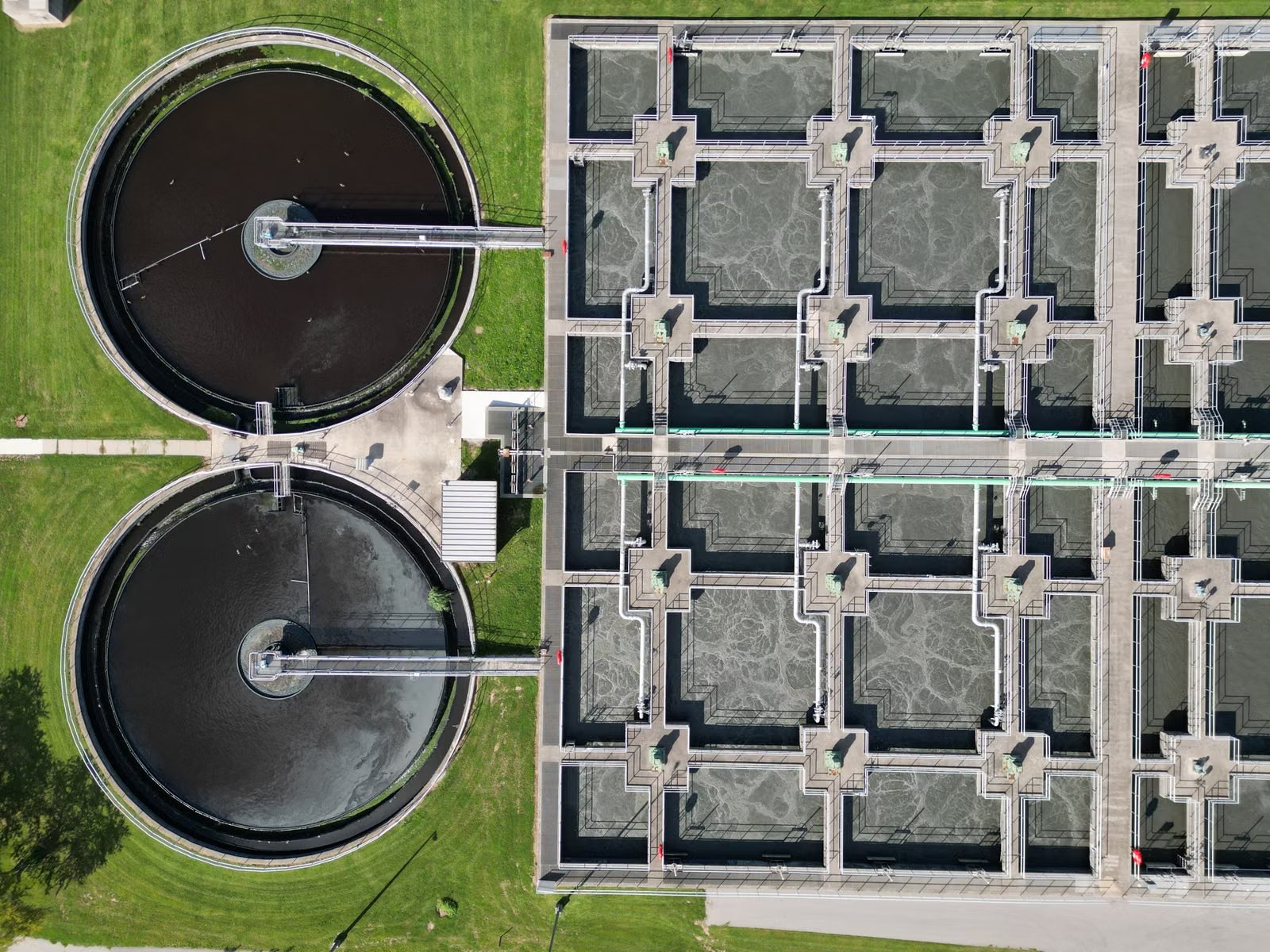
Photo by Giant Asparagus via Pexels, free to use under the Pexels License.
Quick Answer: The Permian Basin generated roughly 25.3 million barrels of produced water a day in 2025, of which 68 percent went to salt water disposal wells, according to the Texas Produced Water Consortium’s 2026 report to the Texas Legislature. Disposal costs now run $0.75 to $1.25 per barrel, and by 2030 the basin could generate an additional 2 to 7 million barrels a day of excess water. Treating it at scale would cost about $2.5 billion per million barrels per day of capacity.
How much water does the Permian actually produce?
More than it produces oil, by a factor of roughly three and a half. The Texas Produced Water Consortium, a state-funded research body based at Texas Tech University, reports in its 2026 report to the Texas Legislature that approximately 25.3 million barrels per day of produced water were generated in the Permian Basin during 2025.
Set that against the Federal Reserve Bank of Dallas figure of 6.9 million barrels per day of Permian oil production in the third quarter of 2026, and the ratio is stark. Every barrel of oil arrives with roughly three and a half barrels of water that has to go somewhere.
| Destination | Volume | Share |
|---|---|---|
| Salt water disposal wells | 17.2 million barrels per day | 68% |
| Recycled for hydraulic fracturing | 5.2 million barrels per day | 21% |
| Enhanced oil recovery, Central Basin Platform | 2.9 million barrels per day | 11% |
| Total generated | 25.3 million barrels per day | 100% |
Of the 17.2 million barrels a day sent to disposal, approximately 15 million barrels a day is injected in Texas. The Consortium’s forecasting indicates that by 2030 the Permian Basin could see growth of an additional 2 to 7 million barrels a day of excess produced water, and that the basin will continue to generate large volumes through 2050.
Why is disposal becoming a constraint?
The Consortium identifies a cluster of reasons rather than a single one: increasing water production volumes, constraints on traditional disposal practices, concerns regarding induced seismicity, disposal well integrity and pore space limitations, and persistent regional water shortages.
Pore space is the one that most directly limits oil production. Injection wells push water into subsurface formations, and those formations have finite capacity at acceptable pressure. As pressure rises, the Railroad Commission restricts injection in designated seismic response areas to reduce earthquake risk, which removes capacity from exactly the areas where drilling is most intense.
The economics have moved accordingly. The Consortium reports produced water disposal costs continuing to increase, in the range of $0.75 to $1.25 per barrel. At 25.3 million barrels a day, even the low end of that range implies disposal spending on the order of $19 million a day across the basin, or roughly $6.9 billion a year.
Reporting from Inside Climate News, published in partnership with the Texas Tribune in August 2026, documented elected officials and industry leaders warning that Texas is approaching the limit of underground space for the nearly 1 billion gallons of wastewater the Permian generates daily, and that a lack of disposal space could constrain oil production in the basin.
What would large-scale treatment cost?
The Consortium puts a number on it that every Permian operator and investor should know. An initial capital investment of $2.5 billion is needed to provide treatment capacity to generate 1 million barrels per day of polished desalinated produced water for beneficial reuse.
Scale that against the problem. The Consortium frames 10 million barrels a day of polished desalinated produced water as the target that would matter, equivalent to an additional 420 million gallons per day or 470,000 acre-feet per year of freshwater, which it describes as significant relative to water availability in West Texas. At $2.5 billion per million barrels a day, that implies roughly $25 billion of capital.
| Measure | Figure |
|---|---|
| Disposal cost per barrel | $0.75 to $1.25 |
| Capital per 1 million barrels per day of treatment capacity | $2.5 billion |
| Freshwater equivalent of 10 million barrels per day treated | 420 million gallons per day |
| Annual freshwater equivalent | 470,000 acre-feet per year |
| Projected additional excess water by 2030 | 2 to 7 million barrels per day |
| Pilot treatment capacity, 2024-2025 | 20 to 800 barrels per day |
| Pilot treatment capacity, 2026 | 2,000 to 20,000 barrels per day |
The pilot scaling figures are the most encouraging line in the report. Treatment systems moved from a range of 20 to 800 barrels per day in 2024 and 2025 to a range of 2,000 to 20,000 barrels per day in 2026, a hundredfold increase at the top end in roughly a year. That is the pattern of a technology moving from laboratory to commercial demonstration.
What is actually being built?
Inside Climate News reported in August 2026 on a ribbon cutting at a Texas Pacific Water Resources treatment facility outside Orla, in Reeves County near the New Mexico line, able to treat up to 10,000 barrels, or 420,000 gallons, of produced water a day. The company selected the location partly because it sits within a seismic response area where the Railroad Commission has reduced underground injection to limit earthquake risk, and expects demand for treatment to concentrate in such areas.
The technology is freeze desalination, which the company describes in terms of an industrial-scale ice maker: when water freezes, salts are pushed out and separate into a brine. About half the raw produced water treated is recoverable for reuse, with the other half remaining as brine that must still be disposed of underground.
Energy is the binding cost. The Orla facility requires 5.5 megawatts of electricity to treat 10,000 barrels a day, with natural gas micro-turbines on site supplying 4 megawatts and the balance from line power.
Texas Pacific Water Resources is a subsidiary of Texas Pacific Land Corporation, one of the largest landowners in the state. It already holds a permit for a pilot project applying treated produced water to nearby rangeland and has requested permission to increase the permitted volume to 2.73 million gallons per day across 102 acres. It submitted an application to the Texas Commission on Environmental Quality in 2024 to discharge treated produced water into Salt Creek, a tributary of the Pecos River, and more than two years later was still awaiting a decision.
Where would the treated water go?
Two routes, and the Consortium is researching both. The first is surface discharge, focused on the Pecos River and Red Bluff Reservoir because TCEQ has received permit applications for approximately 1 million barrels per day of clean water discharges into those bodies. The Consortium notes that consistent release of polished desalinated produced water could significantly increase instream flows and decrease salinity, improving conditions for native freshwater species.
The second is land application, covering greenhouse production, crop irrigation, rangeland restoration and native vegetation establishment. The Consortium reports that across multiple field and controlled-environment studies, many crop species including cotton, sorghum, alfalfa, lettuce, tomato and several specialty crops demonstrated growth and physiological performance comparable to conventional irrigation sources, and that hundreds of thousands of acres could theoretically be rehabilitated in the Permian Basin in coming decades.
For West Texas agriculture, that second pathway is the one with commercial consequences. Cotton and alfalfa are the crops named, and both are grown at scale in the same counties that produce the water.
Is the treated water safe?
The Consortium’s own summary is carefully bounded. Its water quality and toxicology work found that advanced treatment systems can substantially improve produced water quality and reduce biological toxicity, removing petroleum hydrocarbons, dissolved salts, radionuclides, ammonia and other contaminants, and producing water that compared favorably with local groundwater for many measured parameters.
Toxicological testing confirmed that raw, untreated produced water is highly toxic to terrestrial and aquatic organisms, while advanced treatment significantly reduced adverse effects and optimized systems can yield polished desalinated produced water with no toxicity. The Consortium advises long-term monitoring of biological systems to confirm safe application in surface discharge and land application.
Independent research has flagged the same gap. Inside Climate News reported that authors of a peer-reviewed paper in Irrigation Science, studying alfalfa irrigated with treated produced water, described their findings as preliminary because the study covered a single growing season and recommended multi-year studies of cumulative effects. A July study in Separation and Purification Technology noted that short-term laboratory and bench-scale experiments do not adequately capture operational variability or long-term reliability under real-world conditions.
Where does the regulatory process stand?
Permitting authority has consolidated at the Texas Commission on Environmental Quality, and permits have not yet been issued. TCEQ obtained primacy from the U.S. Environmental Protection Agency in 2021 to permit discharges of treated produced water, and during the 2025 legislative session Texas lawmakers transferred authority to permit land application of treated produced water from the Railroad Commission to TCEQ.
The agency began accepting applications to discharge treated wastewater into rivers in 2024 but, per the August 2026 reporting, had yet to issue any permits. It released a proposed rule earlier in 2026 to allow treated produced water to be applied to land for irrigation or rangeland restoration, and received nearly 450 comments on that proposal.
The Consortium frames the regulatory bottleneck in its own terms. Its law, policy, economics and communications research thrust concludes that technological success alone will not enable polished desalinated produced water reuse, and that efforts are needed to support regulatory authority and public acceptance. It reports significant progress in clarifying regulatory authority for land application and surface discharge permits, addressing liability issues and resolving questions about produced water ownership.
Why does ownership of the water matter commercially?
Because treated produced water would become a saleable commodity, and commodities need clear title. If a mineral lessee produces water as a byproduct, whether the water belongs to the operator, the surface owner or the mineral owner determines who can sell it, who bears liability for it and who captures the margin between a $1.00 disposal cost and whatever treated water fetches.
The Consortium lists ownership among the questions on which it reports progress, alongside liability. Those are the two items that would otherwise stop a $2.5 billion treatment facility from reaching financial close, because lenders will not fund an asset whose feedstock title and downstream liability are unsettled.
The same logic applies to the brine. Freeze desalination at the Orla facility recovers about half the raw volume as reusable water and leaves the other half as brine requiring underground disposal. Any treatment project therefore still needs disposal capacity for the residual, which means treatment reduces rather than eliminates the pore space problem.
What is the business opportunity for the Permian?
Three distinct ones, on the published evidence. The first is treatment capacity itself: at $2.5 billion per million barrels a day, and with 17.2 million barrels a day currently going to disposal, the addressable market is measured in tens of billions of dollars of capital.
The second is critical minerals and industrial products. The Consortium reports advances in lithium recovery systems and approaches for converting concentrated brines into useful industrial products, alongside comparative thermodynamic evaluation of desalination technologies and process simulation models integrating treatment with power generation, including nuclear, low-grade heat recovery and critical mineral recovery.
The third is data centers, and it is the most immediate. Inside Climate News reported that Texas Pacific Water Resources can use treated produced water on site in condensers and chillers, and that this is informing plans to supply treated produced water to data centers moving into the Permian Basin. A region with abundant land, abundant power generation and a 25-million-barrel-a-day water stream that currently costs money to dispose of is an unusual fit for cooling-intensive computing.
The constraint on all three is the same: electricity. The Orla plant’s 5.5 megawatts for 10,000 barrels a day implies that treating even a tenth of current disposal volumes would require power on a scale that competes directly with the data centers and grid projects already queuing for Permian interconnection. That is why, as Inside Climate News noted, treating produced water remains more expensive than injecting it underground.
Frequently asked questions
How much produced water does the Permian Basin generate?
Approximately 25.3 million barrels per day in 2025, equal to nearly 1 billion gallons a day, according to the Texas Produced Water Consortium.
What happens to Permian produced water now?
68 percent, or 17.2 million barrels a day, goes to salt water disposal wells, about 15 million barrels a day of that in Texas. 21 percent, or 5.2 million barrels a day, is recycled for hydraulic fracturing, and 11 percent, or 2.9 million barrels a day, is used for enhanced oil recovery on the Central Basin Platform.
What does produced water disposal cost?
Between $0.75 and $1.25 per barrel, and the Texas Produced Water Consortium reports those costs continuing to increase.
How much would treatment capacity cost to build?
About $2.5 billion of initial capital investment for every 1 million barrels per day of polished desalinated produced water capacity.
Can treated produced water be used for farming?
Research suggests it can. Consortium studies found cotton, sorghum, alfalfa, lettuce, tomato and several specialty crops performed comparably to conventional irrigation, though researchers recommend multi-year studies before broad adoption.
Could water disposal limit Permian oil production?
Industry representatives told a Texas Senate committee in August 2026 that a lack of disposal space could soon constrain production, citing pore space limits and injection restrictions in seismic response areas.
Sources and Further Reading
- 2026 Texas Produced Water Consortium Report to the Texas Legislature — Texas Produced Water Consortium, Texas Tech University
- Texas moves toward allowing reuse of treated oilfield waste, August 21, 2026 — The Texas Tribune and Inside Climate News
- Permian Basin Economic Indicators, Third Quarter 2026 — Federal Reserve Bank of Dallas
- Irrigation Science and Separation and Purification Technology, as cited in the above reporting